
When signing documents electronically, knowing the difference between eSignatures and digital signatures helps you choose the right method for your business. Both let you sign without pen and paper, but they differ in security and use cases. Digital signatures use cryptographic technology for tamper-proof verification. eSignatures are broader electronic consent methods that range from simple checkboxes to more sophisticated solutions. This guide explains the differences and helps you decide which option fits your needs.
What Are eSignatures?
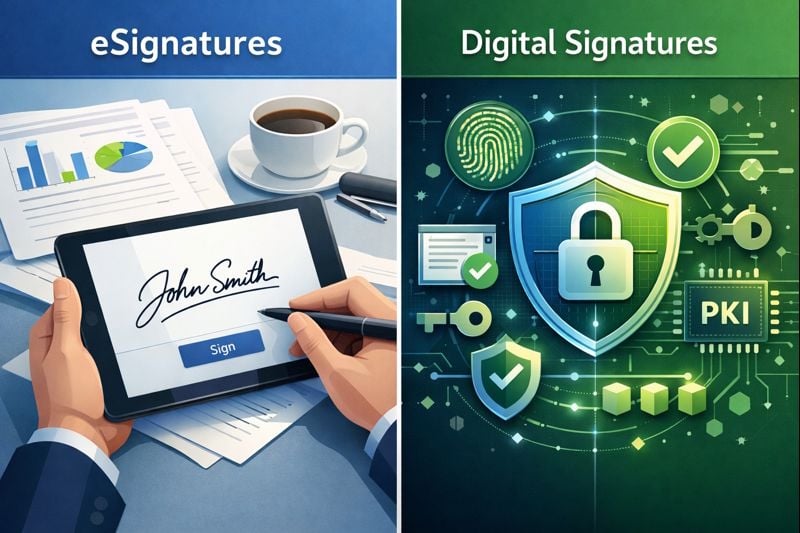
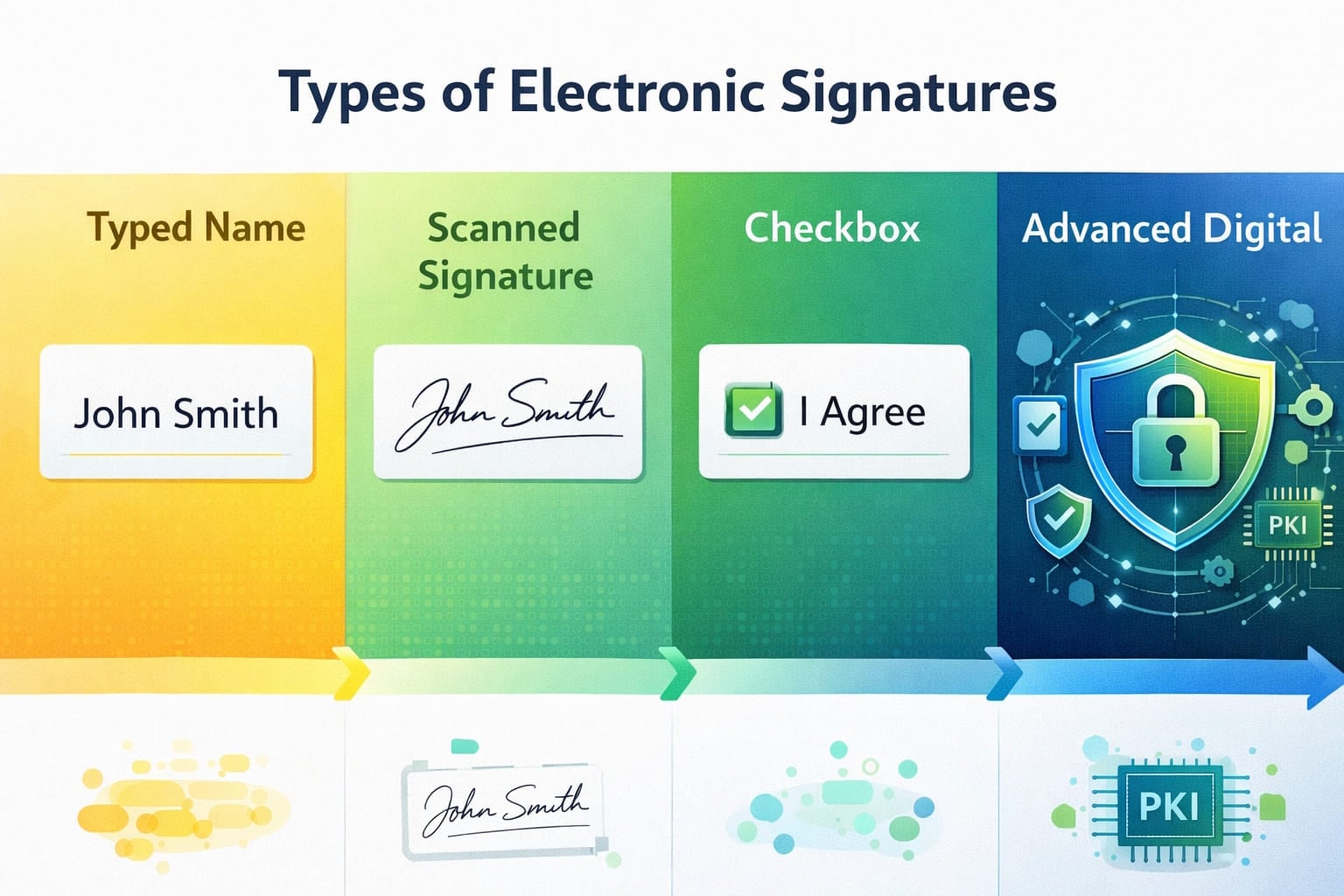
An electronic signature (eSignature) is any electronic indication of consent or approval on a document. Think of it as a digital version of your handwritten signature, but with varying levels of security. eSignatures can take many forms, such as typing your name in a field, clicking an "I agree" button, or drawing your signature on a touchscreen.
eSignatures are flexible. They cover any electronic method used to show agreement or authorization. Common examples include:
- Typed names in email signatures or document fields
- Scanned images of handwritten signatures
- Checkbox confirmations on web forms
- PIN codes or password authentication
- Biometric data like fingerprints or facial recognition
Security levels vary widely. Basic eSignatures suit low-risk transactions. Advanced eSignatures add extra authentication steps like email verification, SMS codes, or security questions.
What Are Digital Signatures?
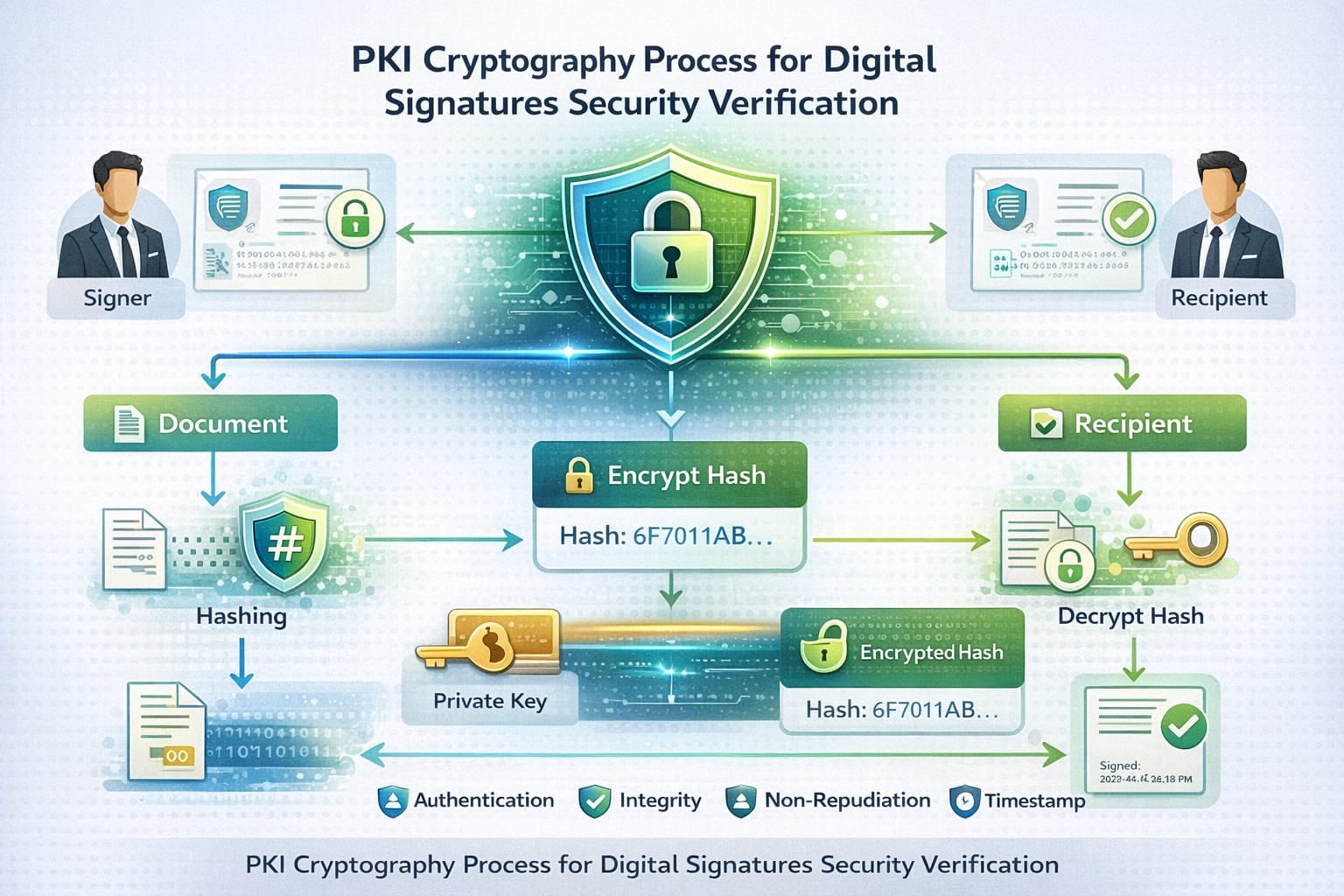
Digital signatures are a specific, highly secure type of eSignature. They use Public Key Infrastructure (PKI) cryptography to verify authenticity and detect tampering. Unlike basic eSignatures, digital signatures create a unique mathematical fingerprint of the document, then encrypt it with the signer's private key.
PKI uses two cryptographic keys. The signer holds a private key. Anyone can use the matching public key to verify the signature. When you sign a document digitally, the software creates a hash of the document's contents and encrypts it with your private key. Recipients can then use your public key to confirm the document has not changed since signing.
Key Security Features of Digital Signatures
- Authentication: Confirms the signer's identity through digital certificates from trusted Certificate Authorities
- Integrity: Detects any changes to the document after signing, even a single character
- Non-repudiation: Prevents signers from denying they signed, since only they hold the private key
- Timestamp verification: Records the exact time of signing for a clear audit trail
Digital signatures follow strict standards and regulations. These include the ESIGN Act in the United States and eIDAS regulations in the European Union. Both define technical requirements and legal validity.
eSignatures vs Digital Signatures: The Core Difference
The main difference comes down to security and verification. All digital signatures are eSignatures, but not all eSignatures are digital signatures. Digital signatures provide cryptographic proof of authenticity and tamper-evidence. Standard eSignatures may rely on simpler methods like email verification or audit trails.
Key Takeaways:
- Digital signatures use PKI cryptography to create tamper-proof, mathematically verifiable signatures
- eSignatures cover any electronic consent method, from simple checkboxes to advanced authentication
- Digital signatures offer the highest security level, including authentication, integrity, and non-repudiation
- eSignatures provide flexibility and convenience for everyday, lower-risk document signing
Decision Framework: When to Use Each Type
Your choice depends on the document's risk level, regulatory requirements, and security needs. Use the framework below to guide your decision.
Use Standard eSignatures For:
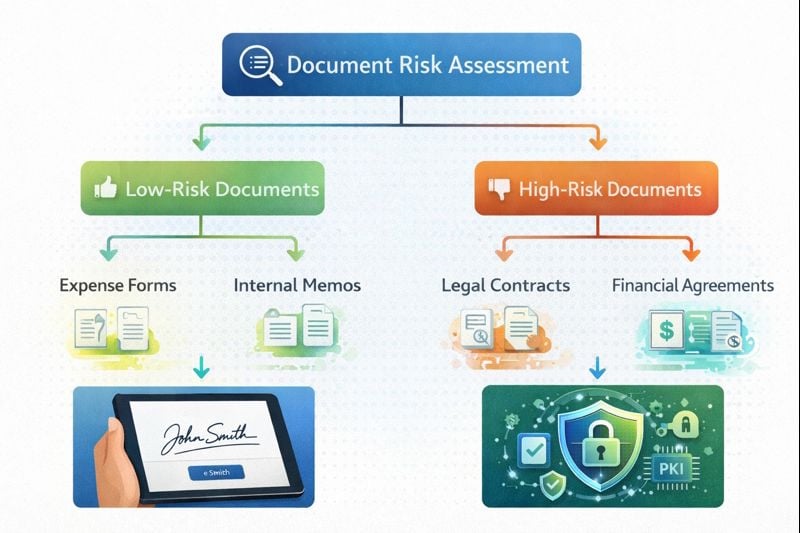
- Internal documents: Expense reports, vacation requests, internal memos, and team approvals
- Routine business operations: Purchase orders under certain thresholds, delivery confirmations, and vendor acknowledgments
- Marketing consent: Newsletter subscriptions, event registrations, and customer feedback forms
- Non-binding agreements: Meeting notes, project proposals, and preliminary drafts
- Low-value transactions: Service requests, appointment confirmations, and basic customer agreements
For example, when an employee submits a small expense report for office supplies, a simple eSignature with email verification provides enough security. The fraud risk is low, and the document does not require regulatory compliance.
Use Digital Signatures For:
- Legal contracts: Employment agreements, partnership contracts, and licensing agreements
- Financial documents: Loan applications, mortgage documents, investment agreements, and tax filings
- Healthcare records: Patient consent forms, medical records, and prescription authorizations requiring HIPAA compliance
- Government submissions: Regulatory filings, permit applications, and official correspondence
- Intellectual property: Patent applications, copyright registrations, and non-disclosure agreements
- High-value transactions: Real estate contracts, merger agreements, and major vendor contracts
For example, finalizing a large software licensing agreement with a vendor calls for digital signatures. You need cryptographic proof of authenticity, tamper detection, and legal non-repudiation. If a dispute arises, the digital signature provides clear evidence of what was signed and when.
Regulatory Consideration:
- Industries like healthcare (HIPAA), finance (SOX, GLBA), and government contracting often require digital signatures for compliance
- International transactions may need digital signatures to meet eIDAS or other regional standards
- Always consult legal counsel when dealing with regulated industries or cross-border agreements
Conclusion
Knowing the difference between eSignatures and digital signatures helps you make better decisions about document security. eSignatures offer convenience for everyday, low-risk documents like expense forms and internal approvals. Digital signatures provide the cryptographic security needed for high-stakes agreements, legal contracts, and regulated documents. Match the security level to your document's risk profile and compliance requirements. This approach helps you avoid over-engineering simple transactions while still protecting critical agreements.
FAQ
Yes, eSignatures are legally binding in most countries. In the United States, the ESIGN Act and UETA provide legal recognition. In the European Union, eIDAS regulations apply. However, some documents such as wills, divorce papers, and certain court orders may require handwritten signatures or specific forms of digital signatures, depending on jurisdiction.
Digital signatures using PKI cryptography are extremely difficult to forge or hack. The mathematical complexity makes them highly secure. Compromising the private key would require breaking encryption that modern computers could not crack in a reasonable timeframe. That said, security depends on proper key management and using certificates from trusted Certificate Authorities.
Yes, digital signatures require specialized software that supports PKI cryptography and digital certificates. Many document management platforms offer digital signature capabilities. You will also need a digital certificate from a trusted Certificate Authority, which may involve identity verification and annual renewal fees.
Basic eSignature solutions range from free to a modest monthly fee per user for standard business plans. Digital signatures cost more because they require digital certificates and specialized PKI infrastructure. Enterprise solutions with full digital signature capabilities can cost significantly more, but the investment is justified for high-security and compliance-driven scenarios.
No, you cannot convert an existing eSignature into a digital signature after the fact. Digital signatures must be created at the time of signing using PKI cryptography and digital certificates. If you used a basic eSignature but later need a digital signature for compliance or security reasons, the document will need to be re-signed using proper digital signature technology.